Blog
EVENT: Fair Work in Action – Supporting employers to advance gender equality
Close the Gap is relaunching the Think Business, Think Equality tool for SMEs at a free online event showcasing how employers can strengthen Fair Work practices and advance gender equality at work.
Following an extensive redevelopment phase working closely with SMEs, the improved tool is now more accessible, streamlined, and tailored to the realities of small businesses. It provides businesses with a personalised action plan to take targeted action across key areas including pay and reward, recruitment and progression, flexible working, workplace culture, pregnancy and maternity, domestic abuse and sexual harassment. The tool also supports SMEs to meet Fair Work requirements and become funding-ready and contract-ready.
The event will feature a presentation of the tool and demonstrate how it can be used in practice, exploring how improving workplace equality strengthens Fair Work practices and business sustainability. There will also be a panel discussion and opportunities for questions.
Anna Ritchie Allan, Executive Director at Close the Gap, will be chairing the event, and the Minister for Business and Employment has been invited to give a keynote address.
Lindsey Millen, Head of Policy and Development at Close the Gap, will be presenting the Think Business Think Equality tool.
We will also have a panel discussion with confirmed speakers Carolyn Currie, Chief Executive Officer at Women’s Enterprise Scotland; Susan Harkins, Head of Innovation and Entrepreneurship at South of Scotland Enterprise; and Eleonora Vanello, Head of Peer Works.
Event Details
Date/time/location: Tuesday 24th February, 10.00am-11.30am, online.
You can register for the free event here.
Joining instructions will be sent to all registered attendees in advance of the event.
If you are unable to register online, please email us at email info@closethegap.org.uk for assistance.
Three manifesto priorities for the 2026 Scottish Parliament election
Close the Gap has published its manifesto for the 2026 Scottish Parliament elections. We call for political parties to commit to action in three priority areas which are critical to women’s labour market equality:
- Build an economy that works for all women, including those who are most marginalised such as racially minoritised women, disabled women, young mothers and single parents.
- Reform the Scottish-specific duties of the public sector equality duty to ensure that the public sector leads the way on advancing women’s equality at work.
- Deliver a childcare system that centres gender equality and puts choice for all at the heart of provision.
Over time, we have seen some progress on women and work. But we also know that progress is fragile, as shown by Covid which resulted in a rolling back of women’s equality, and the cost of living crisis which hit women hardest. Globally we are seeing a backlash against equality, diversity and inclusion. Scotland is not immune to this, with rising misogyny, racism and right-wing activism threatening women’s equality and rights. In this volatile political context, it is imperative that political parties prioritise gender equality and make sure that tackling women’s poverty and inequality is centred in policy ambitions.
Our manifesto sets out 11 key asks which will make meaningful change for women in Scotland, including:
- Design and deliver targeted employability support for disabled women that is accessible, flexible, appropriate to skill level, and proactively challenges occupational segregation.
- Commit to using sectoral bargaining to improve and set pay, terms and conditions in the social care sector in 2026.
- Require public bodies to develop and report on gender pay gap action plans.
- Use state wage-setting powers to increase the pay of all childcare workers to the Real Living Wage, with a more ambitious target set thereafter.
Now is the time for parties to commit to a progressive agenda which ensures that the inequalities that shape the lives of women will be tackled. Our calls are informed by evidence of what will make a difference for women. The next Scottish Government must act decisively to turn evidence into action, ensuring that women’s equality is protected, progressed, and central to building a fairer Scotland for everyone.
16 days of activism: What workplaces can do to support victim-survivors of sexual violence
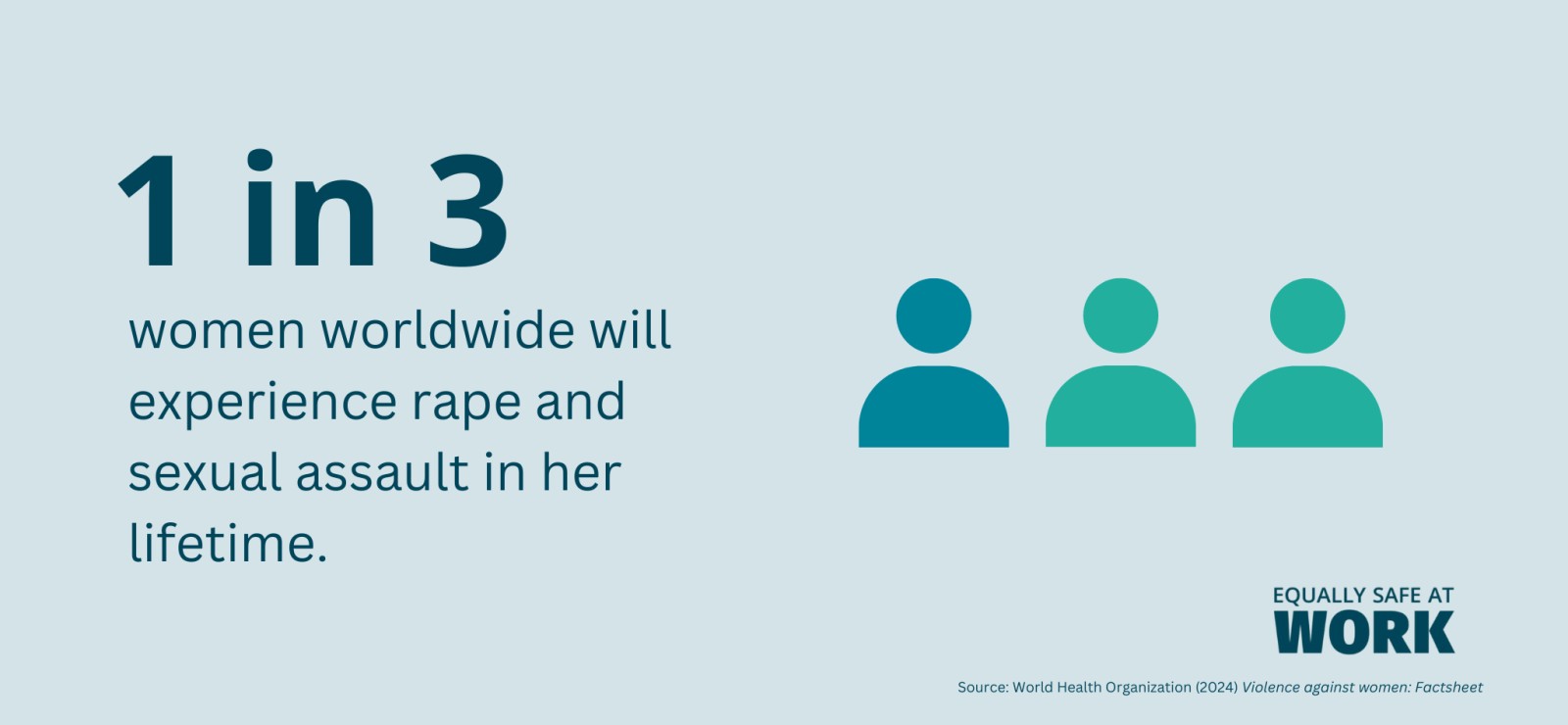
Each year for the 16 days of activism against gender-based violence, we talk about how violence against women is a workplace issue. For this year’s campaign, we wanted to look more closely at what else needs to be done to make workplaces safer for victim-survivors of sexual violence. This is because we recently launched a guidance for line managers on supporting victim-survivors of rape and sexual assault, which is the first of its kind. As well, the changes to the law around employer responsibility to prevent sexual harassment and the banning of non-disclosures agreements creates opportunities for improving and changing practices that haven’t been supporting women.
Changes to employment law
Work on improving organisational responses to rape and sexual assault has been slow. The #MeToo movement was critical in exposing how employers were failing to take meaningful action on women’s complaints of sexual harassment and sexual assault at work. It was also helpful in driving action forward and changes to employment law could create further momentum for employers to take this more seriously.
The Worker Protection (Amendment of Equality Act 2010) Act 2023 that was introduced in October 2024, places further legal responsibilities on employers to take reasonable steps to prevent sexual harassment before it even occurs. Alongside this, the Draft Employment Rights Bill, being brought forward by the UK Government, proposes strengthening this legal responsibility further to require employers to take all reasonable steps to prevent sexual harassment. The Draft Bill also proposes banning employers from using non-disclosure agreements (NDAs) to silence employees who have experienced harassment and discrimination. This significant milestone is the result of years of activism from the campaigning group, can’t buy my silence, which was started by Zelda Perkins, former personal assistant of Harvey Weinstein. The use of NDAs has had a detrimental impact on victim-survivors of sexual violence, preventing many from being heard. It’s also sustained existing poor employment practice on sexual harassment, because so few sexual harassment claims make it to tribunal. As a result, there’s very little case law on sexual harassment and sexual assault at work which means that employment law hasn’t evolved in the same way that it has in other areas such as equal pay.
While these changes are a move in the right direction, there’s still a long way to go to ensure women are safe at work and feel comfortable bringing forward a complaint. After years of being silenced or assuming no action will be taken, employers need to prioritise building trust in reporting processes and demonstrating to staff that they will take reports or disclosures seriously.
Building capacity in line managers
Increasing awareness of violence against women as a workplace issue is a key element of Equally Safe at Work, Close the Gap’s employer accreditation programme. Part of this work includes building capacity in line managers to respond to reports and disclosures of violence against women. A survey of public and third sector employers, conducted as part of Equally Safe at Work, asked line managers about their confidence levels in responding to different forms of violence against women. The findings showed that line manager confidence in responding to rape and sexual assault was one of the lowest. Only 32% of respondents said they felt very confident, with the remaining two-third of managers feeling only somewhat confident or not at all confident. Close the Gap has also heard directly from employers engaged with Equally Safe at Work there is a need to build knowledge on supporting victim-survivors of sexual violence among line managers.
This is why we developed guidance for line managers on how to support victim-survivors of rape and sexual assault. The resource is the first to look at how rape and sexual assault can be perpetrated by colleagues both in and outside of the workplace. It also looks at how experiences of rape and sexual assault unrelated to the workplace can impact women at work. It outlines the overlap with sexual harassment, how line managers can start a conversation, things to avoid and best practice for responding to a disclosure or report.
In the development of our guidance for line managers, we worked with Rape Crisis Scotland’s Survivor Reference Group to gain insight into survivors’ experiences of the workplace. One survivor shared:
‘After what happened to me, I was so exhausted from the trauma and the fear and the pain that being able to get up in the morning required too much. Being able to function normally at work can be near impossible for survivors, and yet, my employers were annoyed when I asked for a week of annual leave. It made me feel ashamed to ask, and I felt so alone.’ [Rape Crisis Scotland’s Survivor Reference Group member]
What employers can do
It’s important that employers recognise their integral role in not only ensuring women’s safety at work, but also supporting victim-survivors who have been raped or sexually assaulted outside of a workplace setting. Many victim-survivors report that they felt there wasn’t any support available at work or anyone they could speak to. We know that when women aren’t able to access support in the workplace that it can lead to diminished performance, periods of absence, and can even result in women leaving their roles entirely. It’s therefore good practice for employers and line managers to understand how to support victim-survivors and also to understand what organisations can do to prevent violence against women from happening in the first place.
The new legal requirement on preventing sexual harassment provides an opportunity for employers to look closely at their current practices, systems and policies to understand how they can do things better. Our new guidance for line managers is a key tool to support this work. Developing improved practice on gender equality at work is a necessary step in preventing violence against women.
Find out more what your organisation can do by visiting www.EquallySafeatWork.scot
New research by Close the Gap reveals disabled women earn less, work harder, face doubt and judgement, and often struggle to get the support they need
Close the Gap has launched important new research, Excluded by Design, which explores disabled women’s experiences of employment in Scotland. Despite disabled women being among the most marginalised in the labour market, this is an underresearched area and their lived realities are rarely considered in policymaking or by employers.
More than 900 disabled women and women with long-term health conditions participated in the research which involved interviews, focus groups and a literature review. The research uncovers the discrimination they face at every stage of employment, from getting a job to accessing support, and progressing in their careers. This is because they’re disabled, but also because they’re women – with racially minoritised disabled women also facing racialised discrimination.
The research shows that disabled women earn less, work harder, face doubt and judgement, and often struggle to get the support they need.
During recruitment processes around a quarter (26%) felt they’d been discriminated against when applying for a job, with this rising to a third (33%) for neurodivergent women. Only 17% felt that their employer provided clear opportunities for them to progress at work, with 58% strongly agreeing or agreeing that their non-disabled colleagues have more access to promotion opportunities than they do.
One survey respondent said:
“Progression feels difficult due to biases against working from home. I’m very cautious about potentially moving to a new role/area where I have to fight for my adjustments again.”
Three quarters (74%) felt they had been judged at work by their manager, colleagues or customers because of their condition/impairment. Just over half (52%) had had their performance questioned at work because of attitudes to their condition/impairment, while 16% were involved in a formal performance review and 36% in an informal review. The impact of this is clear, with vast majority (81%) saying they had felt the need to overcompensate or work harder at their job to prove that they were as capable as colleagues.
A focus group participant said:
“You have to doubly demonstrate [your ability]; mediocre men have got things that women somehow missed out on, and there’s that additional layer of disability on it.”
She added that this pressure is compounded for people of colour, who are often taught from a young age that they must be ‘better than the rest’ because of the systemic advantages afforded to others.
Employers have a legal duty to provide reasonable adjustments, but the research reveals disabled women’s access needs are often unmet in the workplace. When they asked for reasonable adjustments, most disabled women (64%) waited weeks or months, only got partial adjustments, or never receive them at all.
From inaccessible job interviews to line managers who don’t understand their legal duties, disabled women have to navigate a gauntlet of barriers while having to work harder and advocate for their rights.
One survey respondent said:
“I felt like the weakest link in the team and was never asked to lead bits of work.”
The cost to disabled women is high, with nearly three quarters (73%) saying they had experienced physical or mental harm at work, with racially minoritised women being more likely to report this. 44% had experienced bullying, harassment or victimisation, and 83% of those who had said this worsened their condition or impairment and/or resulted in new or worsened health problems. The findings suggest failings in employer responses to bullying, discrimination and harassment; 57% reported it to their employer, but more than 80% were dissatisfied with how it was handled.
Violence against women (VAW) affects all aspects of women’s lives, including the workplace. Most (59%) of respondents had experienced some form of VAW, with this increasing to 78% for neurodivergent women, and 74% for women who have a mental health condition.
When asked about the impact this had had on them, one survey respondent said: “I have had to change jobs, been off sick a number of times, and felt extremely low mood wise.”
Those who had experienced VAW were more also likely to have had their performance questioned at work.
Labour market data shows that the familiar causes of women’s inequality are magnified for disabled women.
- Disabled women face higher pay gaps: they earn on average 23% less per hour than non-disabled men. This means that for every £1 earned by a non-disabled man, a disabled woman earns just 77p.
- Occupational segregation is amplified for disabled women, with more than 40% of their employment being concentrated in health and social care, and education – essential sectors that are undervalued and underpaid.
- Only 7.3% of disabled women work in management or leadership positions, compared with 10.1% of disabled men showing they face a double glass ceiling.
The research exposes a stark picture of disabled women’s experiences of the labour market in Scotland. It shows how disability and gender, and other oppressions such as racism, overlap and compound to create intersecting inequalities which constrain their ability to get a job, and progress in their career. This also puts them at increased risk of poverty, and negatively affects their wellbeing.
Action is needed now
This exclusion is not inevitable; it is the result of policy and practice that fails to account of disabled women’s lives. The solutions exist, what’s needed is action.
Working with disabled people’s organisations, trade unions and disabled women, Close the Gap has developed 38 recommendations for key stakeholders to disabled women’s employment: Scottish Government, UK Government, employers and trade unions. Small steps from employers can make a big difference. Simple changes like ensuring reasonable adjustments are in place, sending interview questions in advance, training line managers properly, and having a “default yes” approach to flexible working can transform disabled women’s working lives.
Government must also act by moving beyond siloed approaches to disability and gender equality, and instead recognise disabled women’s distinct experiences. Government holds levers that can transform disabled women’s labour market equality - from strengthening enforcement of reasonable adjustments to requiring disability pay gap action plans, and tackling disabled women’s in-work poverty.
The report provides a clear roadmap, now government and employers must deliver.
Read the full report, summary report and Easy Read report.
How employers can improve their practice by applying a gender lens
.png)
To make meaningful progress on gender equality in the workplace, we know that employers need to do more to embed a gender analysis in service design, budget processes, and in all workplace policies and practices. In Equally Safe at Work, one of the criteria under the bronze tier is for employers to review a policy, practice or programme to ensure it’s gender-sensitive. However, what employers have told us is that, for many people, they’re unclear what gender-sensitive or gender analysis mean and even less clear about how to put it into practice.
That’s why we’re pleased to announce that we’ve developed a new resource, Applying a gender lens: a tool for employers, to clearly outline how employers can take a step by step approach for applying a gender analysis to employment policies, initiatives or programmes. It will also complement other mainstreaming work that organisations are undertaking, including equality impact assessments.
What does applying a gender lens mean?
Applying a gender lens, which means the same as doing a gender analysis, refers to reviewing a policy, practice or programme to determine what the differential impact is on women and men. This means understanding the different experiences of women in your workplace and also taking specific actions to address any inequalities. Women face gendered barriers that shape their experience of studying, training and employment. Without understanding and addressing these issues, women will continue to be left behind in the labour market.
The new tool uses modern apprenticeships as a worked example for employers to see how to put the steps into practice. Modern apprenticeships mirror the labour market in terms of framework participation being characterised by occupational segregation and different levels of pay. Modern apprenticeships are also the key entry point into the labour market for many young people, making it a good intervention point and opportunity for influencing the make up of the workforce in certain occupations.
For example, when looking at modern apprenticeships, there are clear differences in who participates in certain frameworks. Between April and June this year, the frameworks that had the highest number of new starts among young women were children and young people, and social services and healthcare. In contrast, for young men, construction frameworks had the highest number of new starts, with the majority of young men joining civil engineering and technical frameworks. We see that young women are concentrated in frameworks which are associated with undervalued work, lower pay and poorer labour market outcomes compared to young men. A further point to consider is around completion rates. Women are more likely to complete their apprenticeship if they’re in a female-dominated framework and less likely to do so if they’re in a male-dominated framework. This clearly highlights the challenges that women face entering male-dominated roles that haven’t considered the different needs of women or risks they may be facing, for example, an increased risk of sexual harassment and sexist workplace cultures.
As well, there are often practical barriers that prevent men and women from entering into non-traditional frameworks which is often overlooked or not factored in. For example, women are more likely than men to have primary responsibilities for children, older people and disabled people. A lack of flexible working or a lack of appropriate notice for college timetables or shifts means that women may not be able to participate in certain frameworks because they are unable to organise childcare in time. As well, for disabled women, who may find flexible working beneficial for managing their condition, a lack of quality flexible working opportunities means that they’re excluded from different roles and workplaces.
For racially minoritised women participating in apprenticeships, who made up 4% of all new starts across all framework between April and June,[1] research has highlighted that they face discrimination, are offered fewer hours per week and received less formal training than their White peers.
To be able to apply a gender lens, employers need to understand the root causes of gender inequality in their workplaces and look at why there are different experiences between men and women. This involves recognising the different expectations, inequalities, levels of power and needs of groups of women and men in the workplace.
What you can do
Our new guidance outlines how employers can develop gender-sensitive practice by following four steps:
- Review and gather data to identify any gaps and determine how you will fill them.
- Identify the gendered differences within your workplace.
- Understand the causes of the gendered differences.
- Take action to address any inequalities and measure progress.
The guidance also highlights the importance of using intersectional data, addressing gendered barriers, and taking action to ensure women’s experiences are included in the design and delivery of workplace policies and practices. It aims to support employers to better understand that applying a gender lens requires targeted and committed action. When applying a gender lens is done right, it has the possibility to transform workplaces to be more representative of its staff, service users and wider community.
[1] Based on the data from Skills Development Scotland, respondents stated their race or ethnicity was Mixed or Multiple; Asian; African; Caribbean or Black; and Other ethnic group.
 RSS
RSS