Our commitment to becoming an anti-racist organisation
Close the Gap is working to become an anti-racist organisation that actively challenges hate in all its forms.
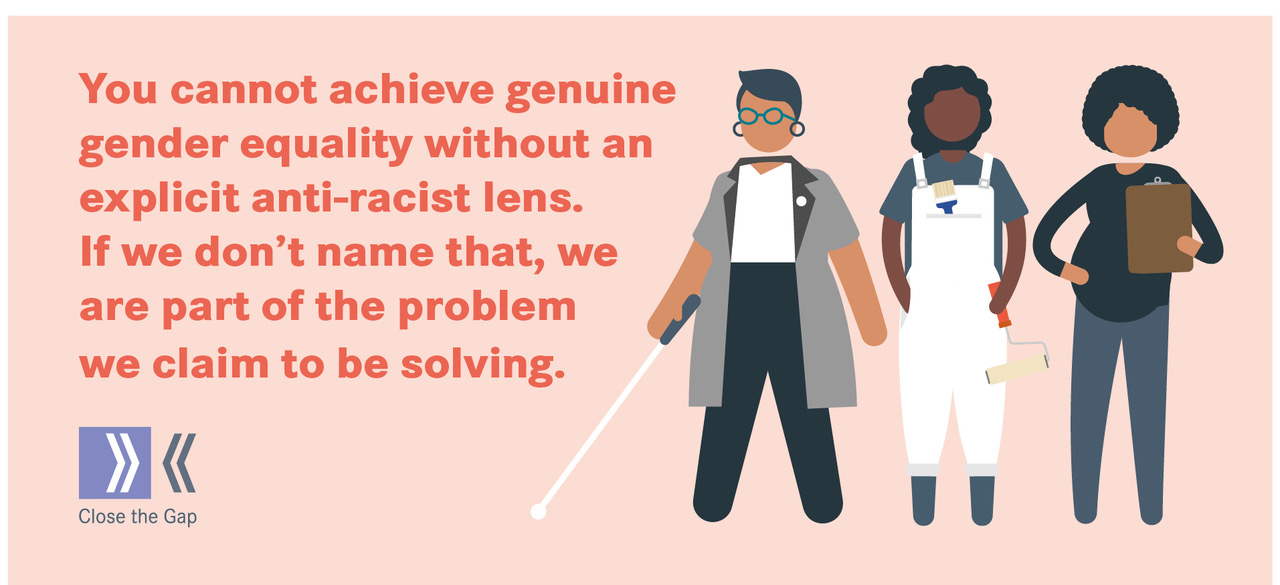
We are operating in a context where structural racism continues to influence labour market outcomes, especially for women, and with rising far-right activism and ongoing backlash against equality and human rights, staying silent or neutral isn’t enough.
A proactive commitment to anti-racism is essential
We work to centre intersectional analysis to make sure that what we do is evidence-based and rooted in the experiences of women who face the most marginalisation. We know we need to do more. Centring intersectionality means actively working to become an anti-racist organisation.
“Our ultimate aim is to be an organisation where anti-racist practice is not a separate workstream, but is woven into everything we do - from how we recruit and support staff, to how we do research and engage with decision-makers.”
Our path to becoming an anti-racist organisation
We worked with anti-racism consultants, Mòr Diversity, to develop a systematic approach for embedding anti-racist practice in Close the Gap. This included:
- An audit of our policies, procedures and practices
- Training for our staff team and board
- Collaborative insight from external group of racially minoritised women
- Action planning workshops
This process involved engaging with all Close the Gap staff and board of trustees and helped us understand where we are and where we need to go.
Our strategy to becoming an anti-racist organisation
Our anti-racism strategy outlines our guiding principles and key actions for the next three years. We will align our work and internal practices with four core principles that will embed our commitment to anti-racism.
Our guiding principles:
1. Embed anti-racism in all we do to ensure we promote justice and meet our legal responsibilities.
Our work and ways of working are grounded in anti-racist practice, guided by expert knowledge and lived experience, and we lead by example.
2. We all share responsibility for building a culture of challenge, curiosity, and learning.
We create safe spaces where we can be challenged, sit with discomfort, and remain open to growth and change.
3. Use our voice to centre and amplify the lived experience of racially minoritised women.
We commit to work on power sharing, partnership building and collaboration, and use our power, resources, profile, and platform responsibly to drive change.
4. We will be accountable and measure progress.
We monitor and evaluate our work; we welcome external challenge to strengthen our work; we hold ourselves to account publicly; and we reflect, learn, and adapt to reach our aims.
Read Close the Gap’s Anti-racist Practice Strategy for 2026 - 2029.
To monitor our progress, we’ve developed an evaluation plan with key indicators of success and change. This plan will be reviewed regularly, capturing both formal and informal learning.
We recognise that anti-racism is a continuous journey of organisational reform and critical self-challenge. But we are clear that advancing gender equality demands that we confront racism directly and structurally.