Young mothers’ rights at work
 We’ve been working with Save the Children Scotland on a project about young mothers’ experiences of work. Young women who had children when they were aged 16-25 have helped shape this project through our Research and Campaign Advisors group.
The young mothers involved created this campaign to help other young mums know more about their rights at work, spot when something isn’t right, and know where to get help if they need it.
This page brings together some of the basics.
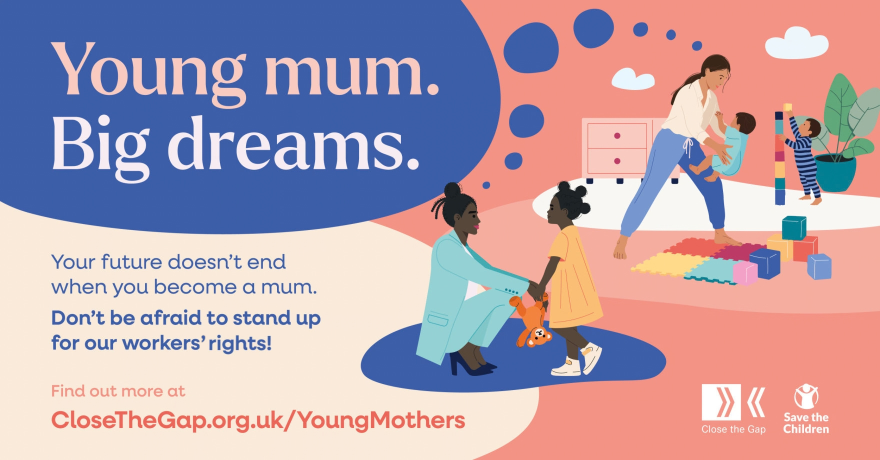
Motherhood shouldn’t cost your career.
Young mothers have rights at work.
But that doesn’t mean it’s always easy to speak up when something feels wrong.
Your employer is responsible for treating you fairly and following the law. Knowing a few of your rights can help you spot when something isn’t right, and know where to get help.
You don’t need to know employment law inside out. Here are some of the basics.
Disclaimer
This is general information, not legal advice. If you’re worried about something that’s happening at work, use the contacts at the end of this page to get advice about your situation.
Flexible working
“I need to change my hours because of childcare. Can I ask?”
Yes. If you’re an employee, you can ask for flexible working from your first day in a job.
That could mean changing your hours, the days you work, your start or finish time, your working pattern or where you work.
Your employer doesn’t have to agree to every request, but they have to consider it properly and talk to you before turning it down.
Pregnancy and maternity
“I’m pregnant. What are my rights at work?”
Your boss can’t treat you unfairly because you’re pregnant or taking maternity leave.
For example, they shouldn’t cut your hours because you’re pregnant, leave you out of training or promotion opportunities, or pressure you to come back from maternity leave before you’re ready.
If you’re an employee, you’re also entitled to paid time off for antenatal care recommended by a healthcare professional.
There are extra protections if you’re at risk of redundancy while pregnant or after having your baby.
Emergencies involving a child
“My childcare has fallen through today. Can I take time off?”
If you’re an employee, you have a right to a reasonable amount of time off to deal with an unexpected emergency involving your child.
That could be because your child is suddenly ill, their nursery unexpectedly closes, or your childcare falls through.
The time off doesn’t have to be paid, and this particular right is for unexpected situations rather than childcare you knew about in advance.
Being treated fairly and feeling safe at work
“Someone at work is treating me differently since I got pregnant.”
Discrimination and harassment at work are against the law.
You’re protected from discrimination because of things including your sex, being pregnant or on mat leave, age, ethnicity, disability, religion or belief, sexual orientation, gender reassignment, and marital/civil partnership status.
Not every bad experience at work will legally count as discrimination, but if something doesn’t feel right you can get advice.
Protection from sexual harassment
“Someone at work keeps making comments that make me uncomfortable. Is that sexual harassment?”
Sexual harassment is against the law.
Sexual harassment is unwanted sexual behaviour that makes you feel humiliated, intimidated, offended or uncomfortable, or creates a hostile environment at work. It can include unwanted sexual comments, jokes, messages, touching or other behaviour of a sexual nature.
It doesn’t have to be intended to cause distress. If the behaviour has that effect on you, it can still be sexual harassment.
Employers have a legal duty to take reasonable steps to prevent sexual harassment from happening in the first place – not just respond after something has happened. This can include things like having a workplace sexual harassment policy, and making sure staff know how to report sexual harassment if it happens.
Joining a trade union
“Something at work doesn’t feel right. Who can help me?”
You don’t have to work it out on your own.
You have the right to join a trade union. A union can help you understand your rights and support you if there’s a problem at work. You can join one even if your workplace doesn’t officially recognise a union. You can find out information on how to join on the STUC website.
Redundancy and unfair dismissal
“I wasn’t aware of my rights and my boss bullied me into quitting. I wish I knew what I was entitled to.”
Your boss can’t legally dismiss you for some reasons, including because you’re pregnant, taking maternity leave, or using certain rights at work.
There are also wider protections against unfair dismissal, although the rules can depend on how long you’ve worked for your employer.
If you’ve been dismissed or you’re worried that you might be, get advice as soon as you can.
Changes are coming
New rights are being introduced for some people who work variable or changing hours. These include rights around guaranteed hours, notice of shifts, and shifts being cancelled or changed at short notice.
These rights aren’t in force yet, but we’ll update this page when they are.
You don’t have to deal with a problem at work on your own
If something doesn’t feel right, you can get free advice from Acas or Citizens Advice, or talk to a trade union. To find out which union to contact, get in touch with the STUC.
Fair work for young mothers
This campaign is part of Fair Work for Young Mothers, a joint project from Close the Gap and Save the Children working to improve young mothers’ access to fair work.
Fair work can give young mothers greater financial security, choice and opportunity. But achieving this means tackling the barriers and inequalities young mothers face at work – and ensuring employers create workplaces where their rights are respected. You can read our research on fair work for young mothers here, and the executive summary report here.