Blog
The refreshed Think Business, Think Equality tool is here
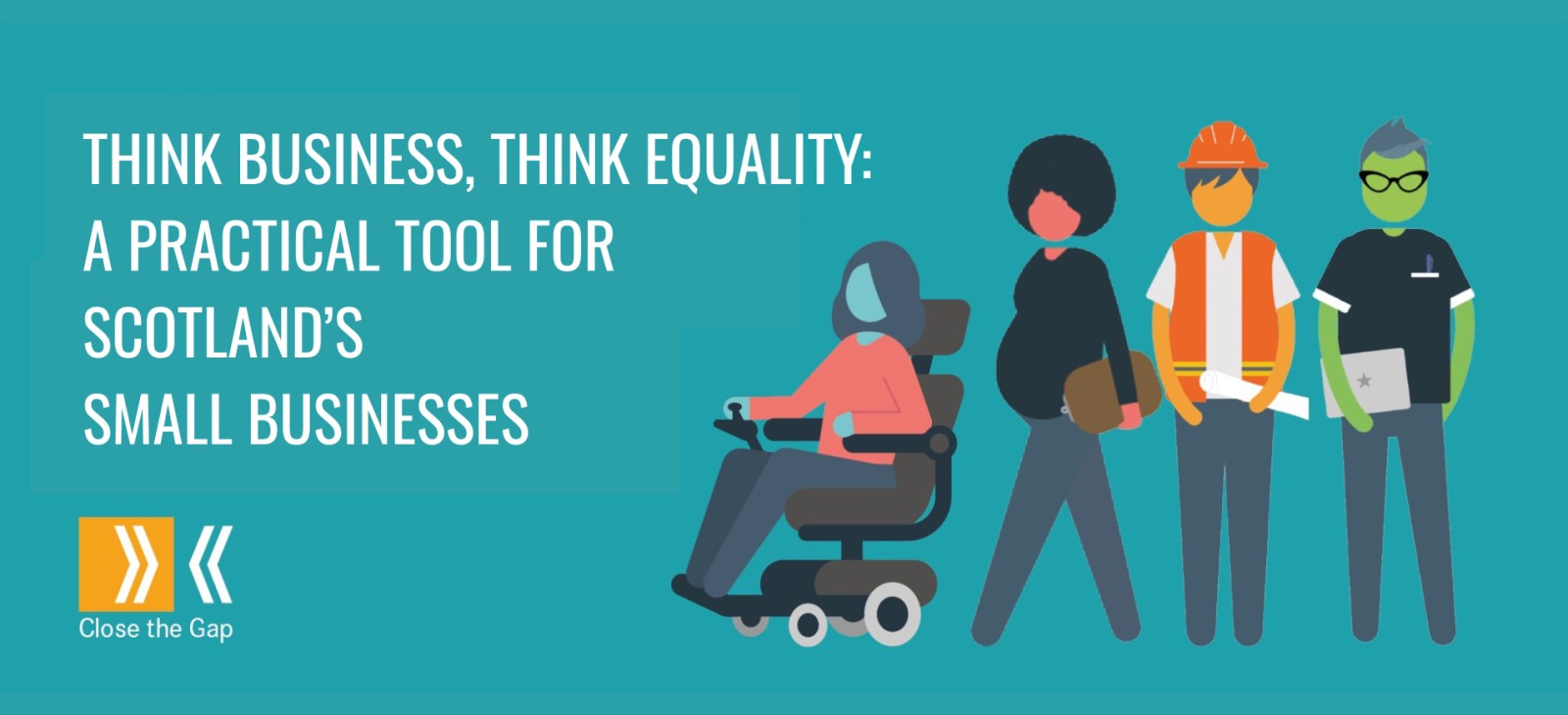
This morning, Close the Gap officially launched the refreshed Think Business, Think Equality tool – our free, practical self-assessment tool designed to help small and medium-sized employers take meaningful action on workplace gender equality.
Originally launched in 2015, Think Business, Think Equality has supported more than 12,000 businesses to better understand women’s labour market inequality and identify practical steps to address it. Over the past decade, the policy landscape has evolved, the evidence base has strengthened, and employers are navigating new economic and workforce challenges. This refresh ensures Think Business Think Equality remains ambitious, relevant, and aligned with Scotland’s Fair Work agenda.
Why this matters now
In the context of ongoing skills shortages, rising in-work poverty and new employment law requirements, advancing gender equality at work is both the right thing to do, and a smart, strategic decision for Scotland’s employers.
It’s the right thing to do because, in 2026, women still face gender inequality at work. The gender pay gap is not an accident; it reflects the workplace practices and societal barriers that shape women’s working lives. The consequences are greater economic insecurity, higher levels of in-work poverty, and persistent child poverty.
Gender inequality at work does not stay at work. It shapes women’s lifetime earnings, economic security and life chances – and affects families and communities across generations. When women are locked out of better-paid roles, passed over for progression, or pushed out by inflexible or hostile workplaces, the consequences are long-lasting.
Inequality also does not affect all women equally. Racially minoritised women, disabled women, single parents, and young mothers face compounded barriers – from discrimination in recruitment and progression, to a lack of reasonable adjustments and inflexible working practices. Too often, those who could benefit most from fair workplaces are those most likely to be excluded.
This shows us that there is a clear moral case for action. Employers are part of society, and the decisions they make about pay, progression and workplace culture have real impacts on people’s lives.
In addition, there is also a strong business case. Skills shortages are exacerbated by occupational segregation. You cannot solve a workforce challenge if you are recruiting from only half the talent pool. The gender pay gap is not just a fairness issue – it is a talent and productivity issue. Inclusive employers attract a wider range of applicants, retain staff for longer, and perform better.
The refreshed Think Business Think Equality tool is designed to support employers to take practical, proportionate action that works for their organisation.
What’s new?
The updated tool reflects what we’ve learned through years of employer engagement, research and policy advocacy. It:
- Focuses on the systems and practices that shape inequality, not just headline figures.
- Strengthens guidance across pay and reward, recruitment and retention, development and progression, flexible working, workplace culture, pregnancy and maternity, domestic abuse and sexual harassment.
- Embeds clearer, more tailored feedback and action planning for SMEs.
- Encourages employers to identify where bias or informal decision-making may be affecting outcomes.
- Aligns closely with the Fair Work Framework – particularly the Opportunity and Respect dimensions.
As before, the tool generates a personalised action plan based on an employer’s responses, helping them prioritise actions that will have the greatest impact.
Designed with SMEs in mind
Small and medium-sized businesses are the backbone of Scotland’s economy. Yet many lack in-house HR capacity or specialist equality expertise.
Think Business, Think Equality translates complex equality and employment law obligations into practical workplace steps. It supports employers to move beyond minimum compliance or funding conditionality, and instead embed equality into everyday employment practice – from how roles are advertised, to how pay decisions are made, to how flexible working is managed in practice.
From evidence to action
Close the Gap’s research consistently shows that workplace inequality is driven by organisational systems and practices, not individual choices.
Small, intentional changes to recruitment processes, pay structures, progression pathways, and workplace culture can make a significant difference to women’s access to fair, secure and rewarding work.
The refreshed Think Business, Think Equality tool is here to support that change.
The tool is free to use and available now. Take your first self-assessment today.
 RSS
RSS