Blog
16 days of activism: What workplaces can do to support victim-survivors of sexual violence
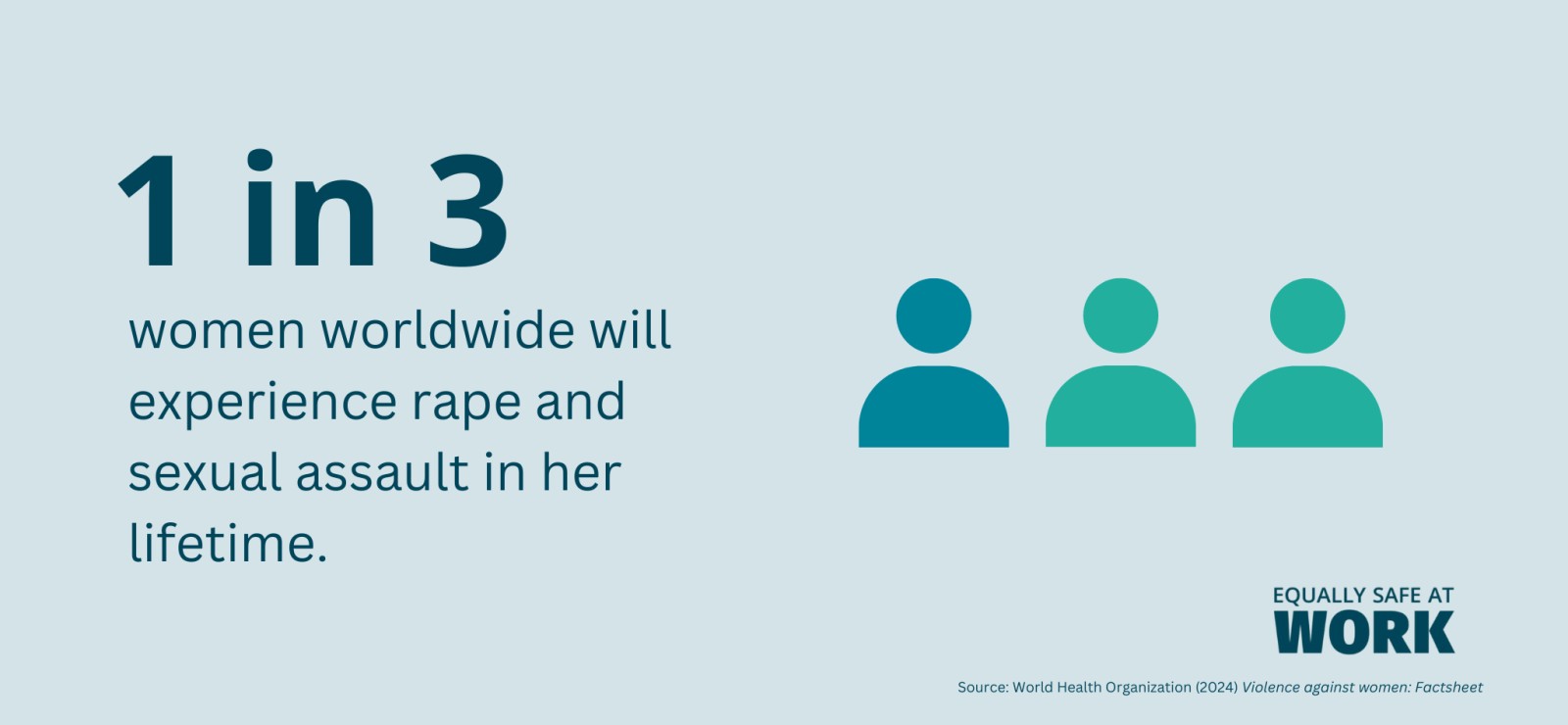
Each year for the 16 days of activism against gender-based violence, we talk about how violence against women is a workplace issue. For this year’s campaign, we wanted to look more closely at what else needs to be done to make workplaces safer for victim-survivors of sexual violence. This is because we recently launched a guidance for line managers on supporting victim-survivors of rape and sexual assault, which is the first of its kind. As well, the changes to the law around employer responsibility to prevent sexual harassment and the banning of non-disclosures agreements creates opportunities for improving and changing practices that haven’t been supporting women.
Changes to employment law
Work on improving organisational responses to rape and sexual assault has been slow. The #MeToo movement was critical in exposing how employers were failing to take meaningful action on women’s complaints of sexual harassment and sexual assault at work. It was also helpful in driving action forward and changes to employment law could create further momentum for employers to take this more seriously.
The Worker Protection (Amendment of Equality Act 2010) Act 2023 that was introduced in October 2024, places further legal responsibilities on employers to take reasonable steps to prevent sexual harassment before it even occurs. Alongside this, the Draft Employment Rights Bill, being brought forward by the UK Government, proposes strengthening this legal responsibility further to require employers to take all reasonable steps to prevent sexual harassment. The Draft Bill also proposes banning employers from using non-disclosure agreements (NDAs) to silence employees who have experienced harassment and discrimination. This significant milestone is the result of years of activism from the campaigning group, can’t buy my silence, which was started by Zelda Perkins, former personal assistant of Harvey Weinstein. The use of NDAs has had a detrimental impact on victim-survivors of sexual violence, preventing many from being heard. It’s also sustained existing poor employment practice on sexual harassment, because so few sexual harassment claims make it to tribunal. As a result, there’s very little case law on sexual harassment and sexual assault at work which means that employment law hasn’t evolved in the same way that it has in other areas such as equal pay.
While these changes are a move in the right direction, there’s still a long way to go to ensure women are safe at work and feel comfortable bringing forward a complaint. After years of being silenced or assuming no action will be taken, employers need to prioritise building trust in reporting processes and demonstrating to staff that they will take reports or disclosures seriously.
Building capacity in line managers
Increasing awareness of violence against women as a workplace issue is a key element of Equally Safe at Work, Close the Gap’s employer accreditation programme. Part of this work includes building capacity in line managers to respond to reports and disclosures of violence against women. A survey of public and third sector employers, conducted as part of Equally Safe at Work, asked line managers about their confidence levels in responding to different forms of violence against women. The findings showed that line manager confidence in responding to rape and sexual assault was one of the lowest. Only 32% of respondents said they felt very confident, with the remaining two-third of managers feeling only somewhat confident or not at all confident. Close the Gap has also heard directly from employers engaged with Equally Safe at Work there is a need to build knowledge on supporting victim-survivors of sexual violence among line managers.
This is why we developed guidance for line managers on how to support victim-survivors of rape and sexual assault. The resource is the first to look at how rape and sexual assault can be perpetrated by colleagues both in and outside of the workplace. It also looks at how experiences of rape and sexual assault unrelated to the workplace can impact women at work. It outlines the overlap with sexual harassment, how line managers can start a conversation, things to avoid and best practice for responding to a disclosure or report.
In the development of our guidance for line managers, we worked with Rape Crisis Scotland’s Survivor Reference Group to gain insight into survivors’ experiences of the workplace. One survivor shared:
‘After what happened to me, I was so exhausted from the trauma and the fear and the pain that being able to get up in the morning required too much. Being able to function normally at work can be near impossible for survivors, and yet, my employers were annoyed when I asked for a week of annual leave. It made me feel ashamed to ask, and I felt so alone.’ [Rape Crisis Scotland’s Survivor Reference Group member]
What employers can do
It’s important that employers recognise their integral role in not only ensuring women’s safety at work, but also supporting victim-survivors who have been raped or sexually assaulted outside of a workplace setting. Many victim-survivors report that they felt there wasn’t any support available at work or anyone they could speak to. We know that when women aren’t able to access support in the workplace that it can lead to diminished performance, periods of absence, and can even result in women leaving their roles entirely. It’s therefore good practice for employers and line managers to understand how to support victim-survivors and also to understand what organisations can do to prevent violence against women from happening in the first place.
The new legal requirement on preventing sexual harassment provides an opportunity for employers to look closely at their current practices, systems and policies to understand how they can do things better. Our new guidance for line managers is a key tool to support this work. Developing improved practice on gender equality at work is a necessary step in preventing violence against women.
Find out more what your organisation can do by visiting www.EquallySafeatWork.scot
 RSS
RSS